
It was the Dừa Blend from my Vietnamese coffee post. Small confession: they made me buy a new grinder, and then the new grinder made them taste worse.
The beans that did it
If you haven’t read My first try of Vietnamese coffee: coconut, culi and a ruined first grind, here is the short version. Dừa Blend is 70% Robusta and 30% culi, and the bag smells so strongly of coconut that I keep sniffing it like a woman possessed. My blade grinder, on the other hand, turned my first batch to burnt powder. I got the second batch right by grinding for only six seconds, but I knew a blade grinder would always be a gamble with beans like these. Too much heat, too many fine particles, and the coconut is gone.
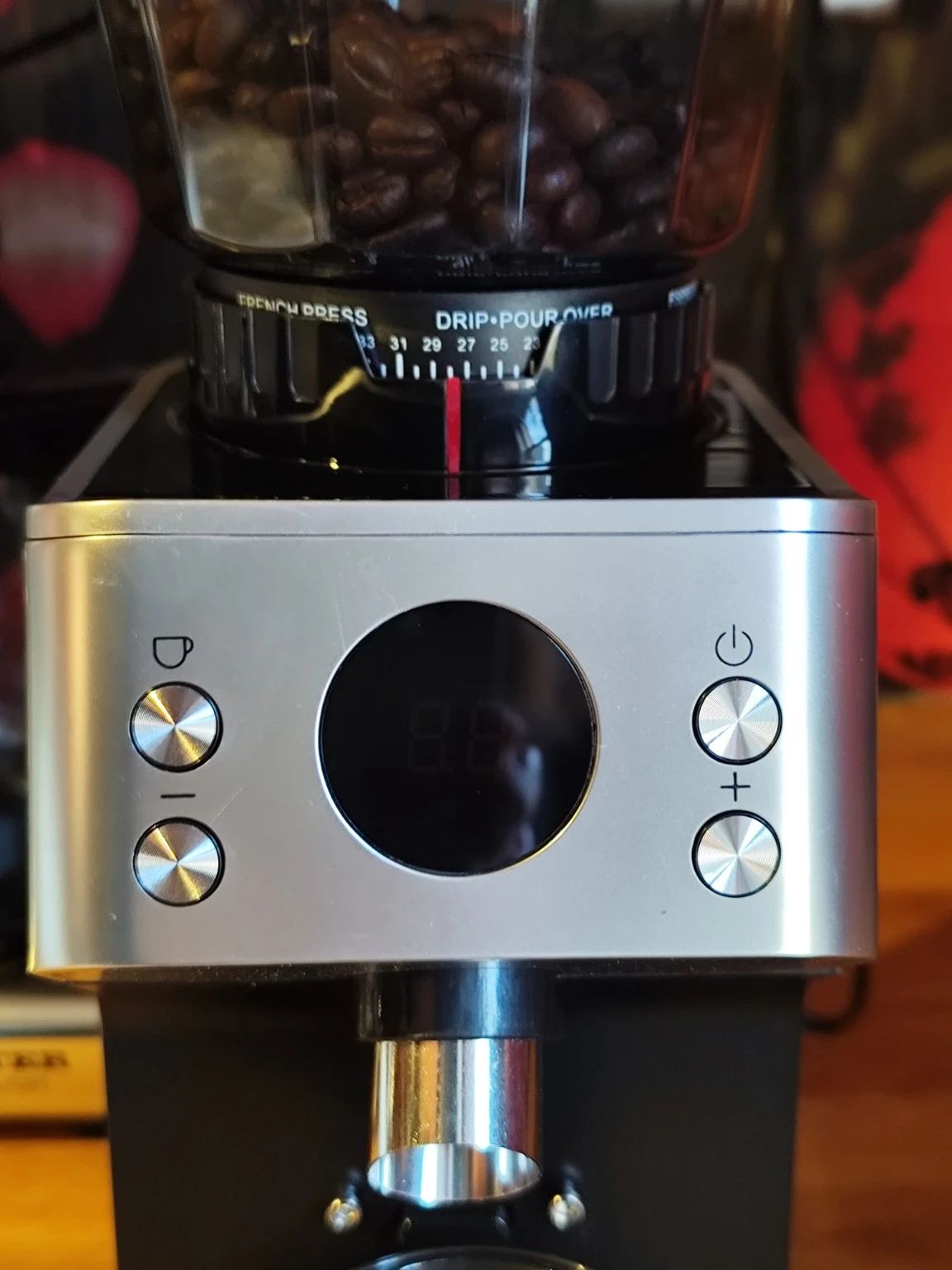
So I bought an AAOBOSI electric burr grinder. It has stainless steel conical burrs and 45 settings. It’s not fancy, but it does the trick.
The unexpected result
I was convinced my coffee would now be better. I set the dial to about 22, brewed a cup and was disappointed. The smoothness I loved had faded a little, and there was a musty note I had never tasted in this coffee before. Once I’d noticed it, I couldn’t stop noticing it.
My theory is that I’d gone too fine. I had never used a burr grinder before, so I had no feel for what the numbers on the dial meant. A finer grind extracts more, and some of what I was extracting clearly wasn’t what I wanted.
Turning the dial
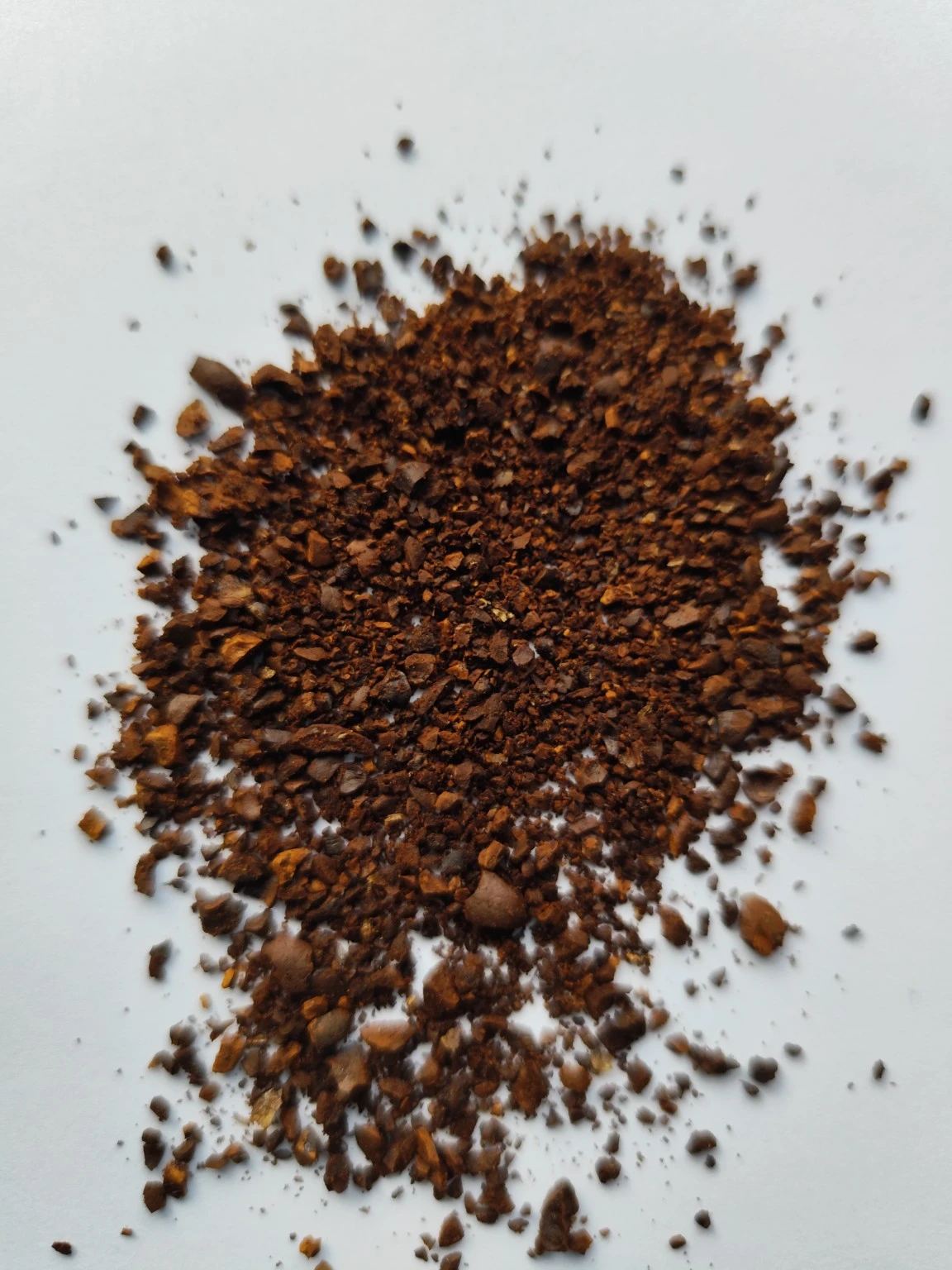
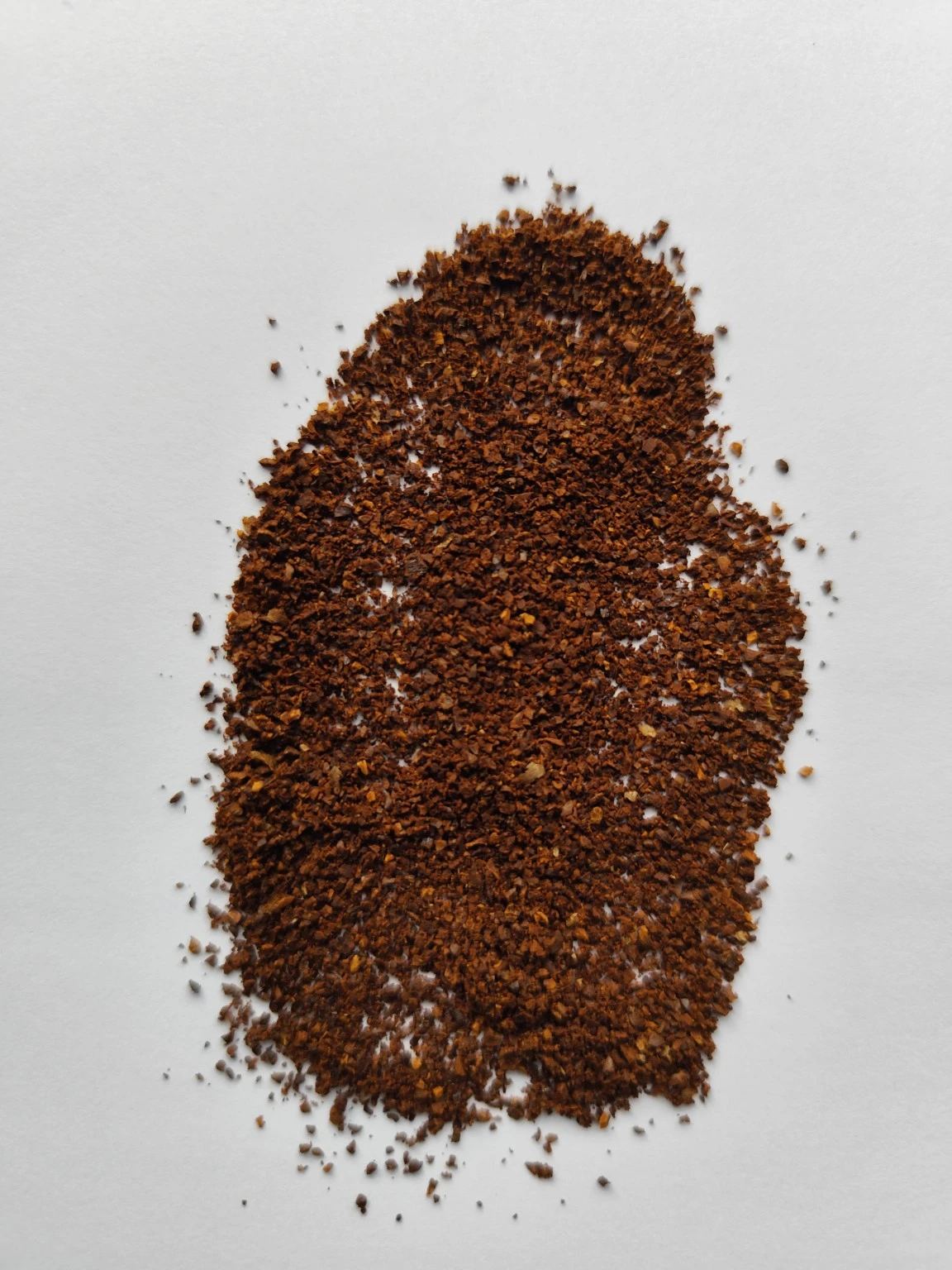
I moved the setting up to 28, a coarser grind, and the mustiness faded. These days I use 32. Here are the grounds from both grinders, side by side, and the difference is easy to see:
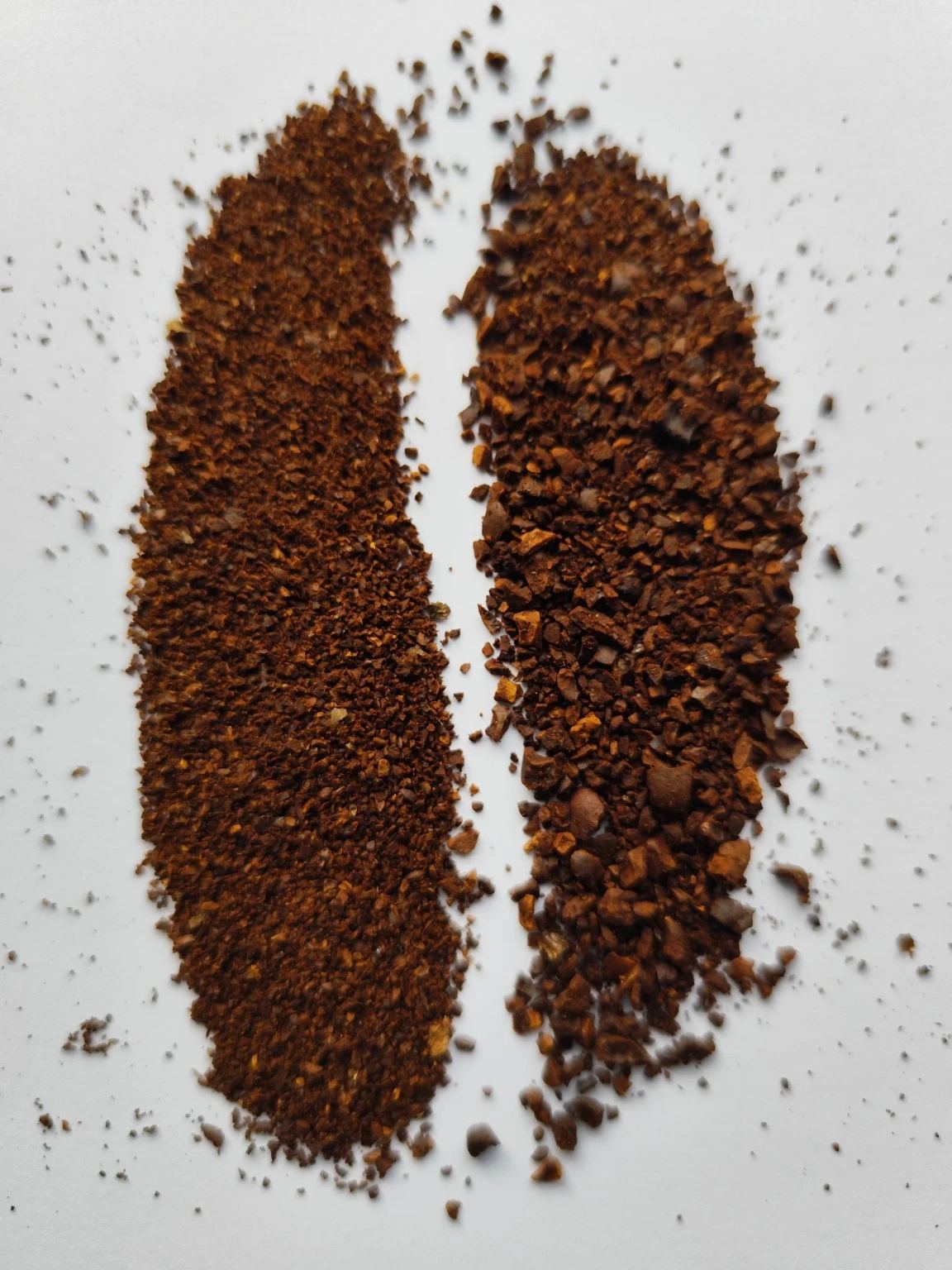
But was it the grind?
Here is where I have to be honest. I changed two things at once. When I opened a new bag of the same coffee, I poured it on top of the beans already in the hopper, so for a while the grinder held a mix of old and new. These days I grind at 32, and the coffee has been delicious every single morning, quickly and without fuss.
So what fixed it? It may have been the setting. It may have been the first bag, the one that was in the grinder when I first noticed the mustiness. The traditional Vietnamese range has no roast or batch dates, and the roaster couldn’t tell me the harvest date or how the beans were processed, so I can’t tell either. Who knows? What I can say is that the same coffee, in the same grinder, now gives me a fantastic cup.
Where did the coconut go?
One more thing I noticed, and it happened with both grinders. The bag smells wonderful. After grinding, the coconut has mostly disappeared, and the blade grinder leaves a less pleasant smell than the burr one. The brewed coffee has barely any coconut either. But if I stop trying to drink it while it’s still scalding hot, the coconut aroma slowly comes back. It gets stronger the colder I let the coffee become.
The coconut doesn’t really disappear and return. Grinding releases aroma compounds, and some escape quickly, especially if there is heat. Very hot coffee also hides delicate aromas, so the coconut I smell at the end was probably always there and only became noticeable as the cup cooled. Either way, if you’re trying an unfamiliar coffee, don’t judge it on the first piping-hot sip, like me.
What I learned
- A more even grind is not automatically a better-tasting one.
- Grind size matters more than I expected, especially with a new grinder.
- If you change two things at once, you can’t be certain which one made the difference.
- Let your coffee cool a little.