
Tasting Journals
Coffee Tasting Journal
Structured scorecards and a coffee flavour wheel for recording beans, roasts and brewing methods.
Publishing
Tasting GuidesWholesale enquiriesBlogComing later
Printable, tablet and reMarkable editions, plus cards, are being prepared and are not currently sold here.
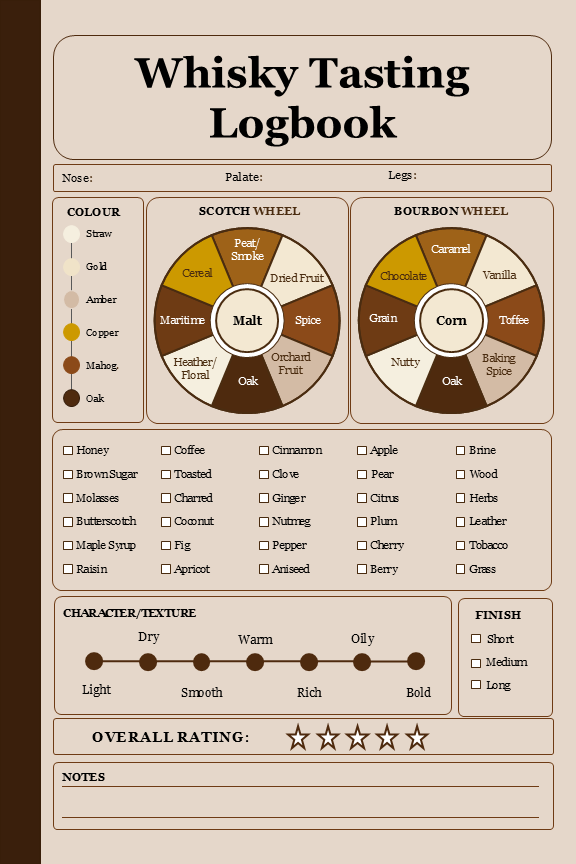 Featured bookWhisky Tasting Logbook →
Tasting Logbooks
100 scorecards with a coffee flavour wheel, a process and acidity wheel, a roast-level guide and 30 quick-reference flavour and aroma prompts, plus index pages.
Choose an Amazon marketplace for this paperback edition. Availability and delivery can vary.
This is a coffee log for anyone who wants to remember what they drank and how it compared. Each coffee gets its own page. Note the name, origin, roaster, variety, producer or farm, date, roast date and brew method, then write down what you notice in the aroma, flavour and aftertaste.
Finding the words for what you taste or smell can be tricky, so the checkboxes give helpful prompts. There are 30 common flavours to tick, from jasmine and berry to molasses, hazelnut and tea-like. A coffee flavour wheel groups flavours into families, and a separate process and acidity wheel records how the coffee was processed and how bright it tastes. A roast-level guide runs from light to dark, and a body and texture scale from light to full. Mark the length as short, medium or long, then add a star rating and a few lines of notes.
Four index pages hold a numbered list of your coffees with their ratings, so a favourite is easy to find again.
Quick to tick, easy to compare later.
Light, medium-light, medium, medium-dark, dark.
A scale from light, clean, smooth, creamy, juicy and syrupy to full, plus short, medium or long length.
Four index pages and an ownership page.
Name, origin, roaster, variety, producer or farm, date, roast date and brew method, then aroma, flavour, aftertaste, rating and notes on each.
The coffee flavour wheel covers floral, fruity, sour/fermented, green/vegetable, roasted, spice, nutty/cocoa and sweet. The process and acidity wheel is a separate guide, with a process half (washed, natural, honey, experimental) and an acidity half (low, soft, bright, lively).
The cover is in colour. The inside pages, including the wheels, are grayscale.
P is for process and A is for acidity. The left half of the wheel has the process words (washed, natural, honey, experimental) and the right half has the acidity words (low, soft, bright, lively).
No, one. The coffee wheel is the flavour wheel. The process and acidity wheel is a separate guide to how the coffee was processed and how bright it tastes.
No. The flavour wheel and checklist suggest words for what you smell and taste.
Beginners who would like a little guidance, and regular tasters who want one consistent format for trying new beans, comparing roasters and brewing at home. It also works as a gift for coffee lovers.
The Coffee Tasting Journal is the guided edition. The logbook is built for recording many coffees quickly and clearly.
Tasting Journals
Structured scorecards and a coffee flavour wheel for recording beans, roasts and brewing methods.
Trivia & Quiz Books
Questions, answers and curious facts about coffee culture around the world.